
Table of Contents
Knitted triangle scarves
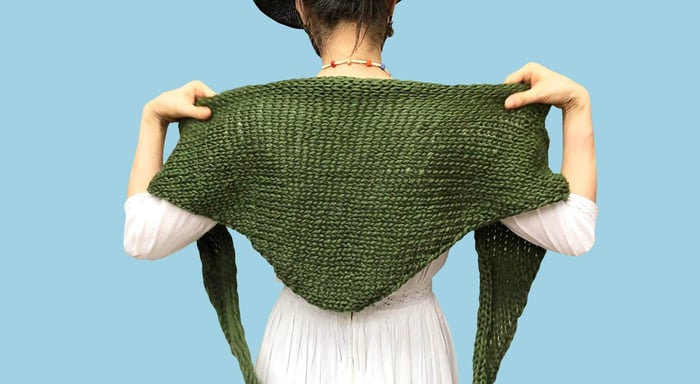
Her Shawl in Merino No. 5
Knitted triangle scarves have been getting a lot of attention lately, but at Loopy Mango, they’re not a new idea. We’ve been working with this form for years — not because it’s trending, but because it works. The construction is simple, the drape is flattering, and the possibilities feel endless without ever becoming complicated.
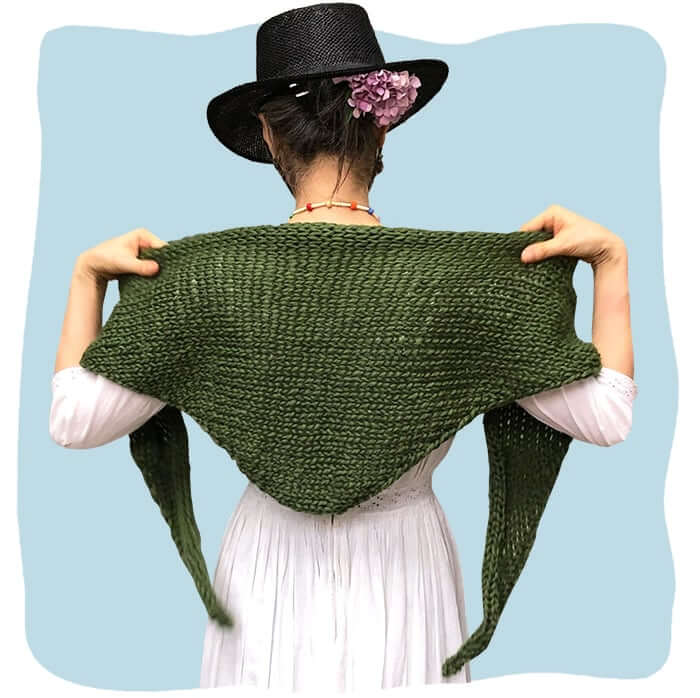
Babushka Shawl in Summer
knitted triangle scarves sit in a sweet spot. They’re easy to wear, adaptable across seasons, and welcoming to knitters at every level. Whether worn loosely over the shoulders, worn as a headscarf, tied close around the neck, or layered under or over a coat, the triangle has a natural ease that makes it feel timeless rather than tied to any particular moment.
Why This Form Keeps Returning
Some knitwear shapes come and go. Others endure quietly in the background, resurfacing again and again because they solve real problems. The triangular scarf belongs in that second category.
Europa Neckerchief in Dream
From a design perspective, this construction is efficient and intuitive. It grows gradually, creating movement and drape without complicated shaping. From a maker’s perspective, it’s forgiving. You can adjust size as you go, stop early or keep knitting, and still end up with something wearable.
That balance is part of what makes triangle scarves so appealing to beginners. You don’t need to master complex techniques to create something beautiful. At the same time, experienced knitters appreciate how responsive the form is to changes in yarn, scale, and finishing details.
Not Trendy, Just Reliable
It’s true that knitted triangle scarves are especially visible right now. But visibility isn’t what makes a design worthwhile. Longevity does.
This style has appeared in knitwear traditions for decades because it adapts so easily. Knit it small and light, and it becomes an everyday accessory. Scale it up in chunky yarn, and it turns into something closer to outerwear. The same basic idea can feel delicate, dramatic, playful, or restrained.
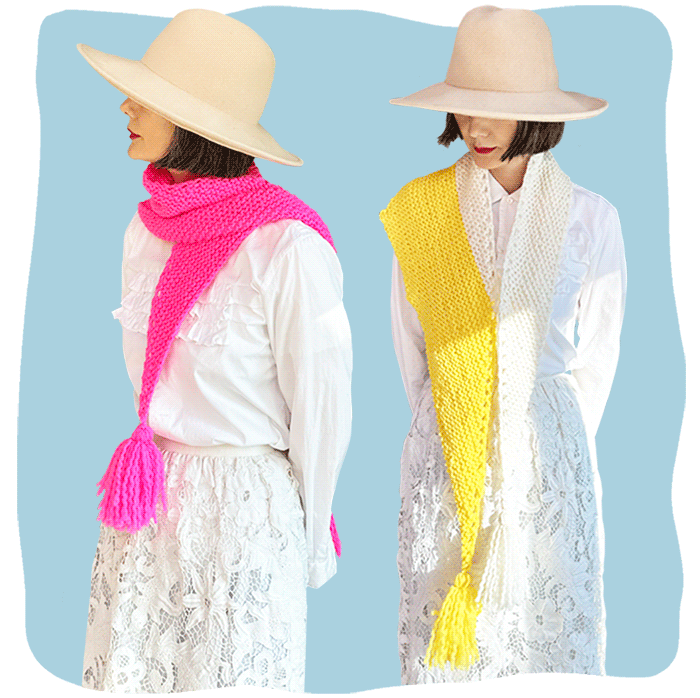
Easy Breezy Scarf/Shawl in Dream
For us, returning to this form isn’t about repeating ourselves. It’s about revisiting something dependable and asking new questions: What happens if the yarn gets bigger? What if we add a small detail? Embellish with embroidery, add some fringe or a tassels? What if we keep everything simple and let the material speak?
The Loopy Mango Approach
All of our triangle scarves start from a familiar place, but none of them end up looking the same. What makes them feel distinctly Loopy Mango is the way we play with proportion, texture, and detail — always keeping the process accessible.
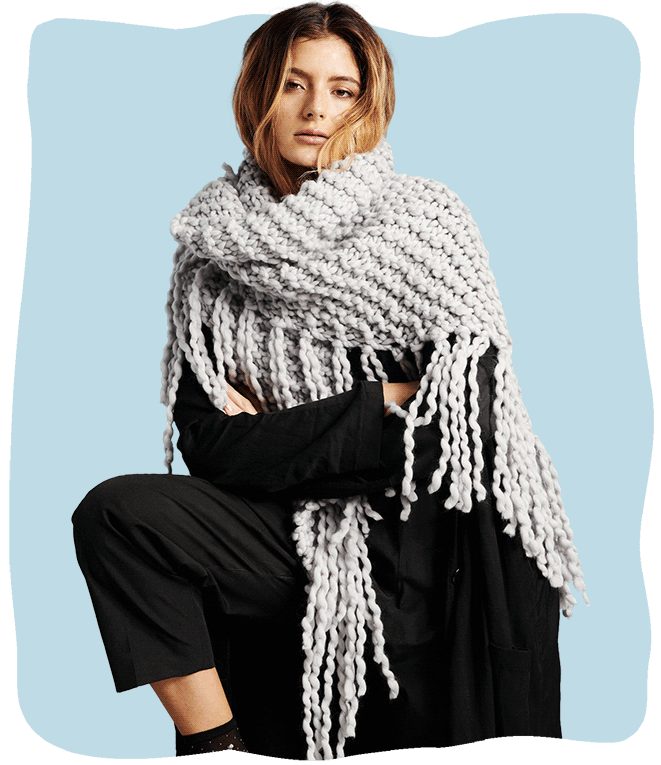
Her Fringe Shawl in Merino No. 5
Sometimes that means leaning into scale. Super chunky yarn transforms a modest construction into a bold, oversized piece that can be wrapped, tied, and styled in multiple ways. Built-in ties or exaggerated proportions add function as well as visual interest.
Other times, the change is subtle. A clean, minimal scarf becomes something entirely different with the addition of fringe, embroidery, or a contrasting edge. These details don’t complicate the knitting itself; they simply shift the mood.
Europa Neckerchief in Dream
That flexibility is intentional. We like designs that give knitters room to decide how far they want to take a project — whether that means stopping at the simplest version or adding personal touches along the way.
Designed to Be Approachable
One of our core beliefs is that knitting doesn’t need to be difficult to be rewarding. Many of our scarf designs are built around straightforward techniques, repetitive rhythms, and clear construction. You can get very far with using just your simple old knit stich!
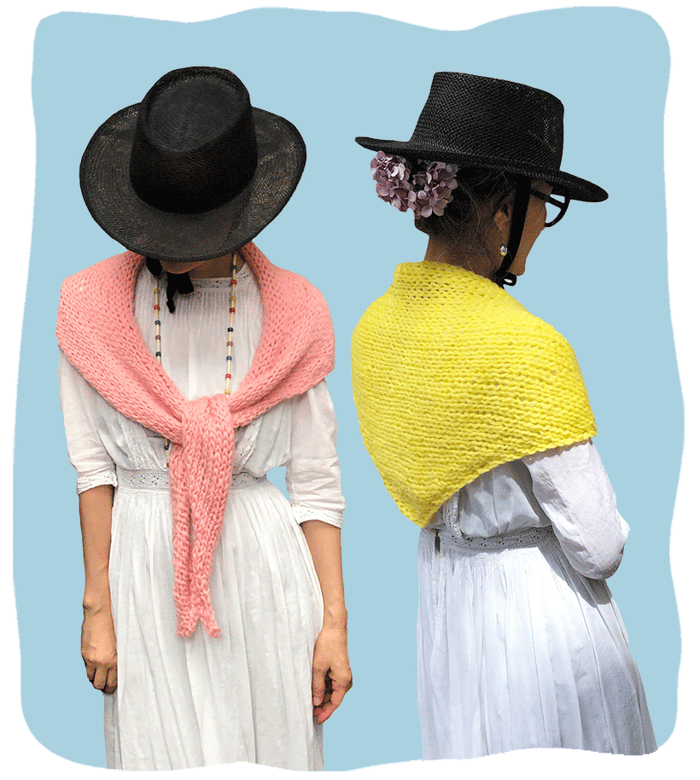
Babushka Shawl in Dream
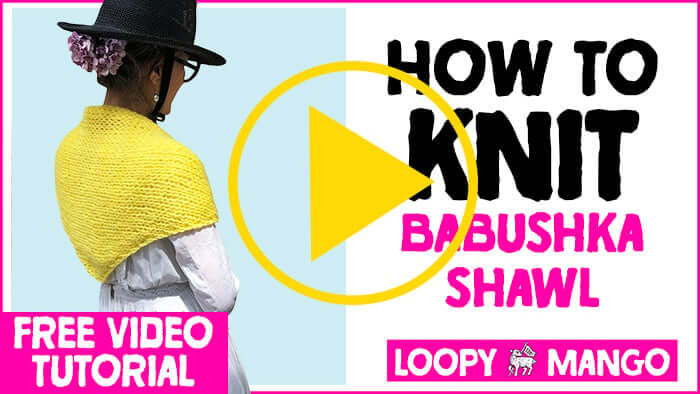
Several come with start-to-finish tutorials, making them especially welcoming if you’re new to knitting or returning after a break. There’s no pressure to “level up” before you’re ready. The project meets you where you are.
That approachability doesn’t mean the result feels basic. In fact, these scarves often look more complex than they are. The interest comes from materials, scale, and finishing — not from technical difficulty.
Choosing the Right Triangle Scarf for You
Because the underlying construction is so flexible, choosing a triangle scarf often comes down to how — and where — you plan to wear it.
If you want something practical and lightweight, a smaller version knit in worsted-weight yarn is easy to layer and quick to make. If you’re drawn to bold, sculptural pieces, oversized styles in chunky yarn create instant impact and warmth. Decorative details like fringe or embroidery can shift a piece from minimal to expressive without changing how it’s knit.
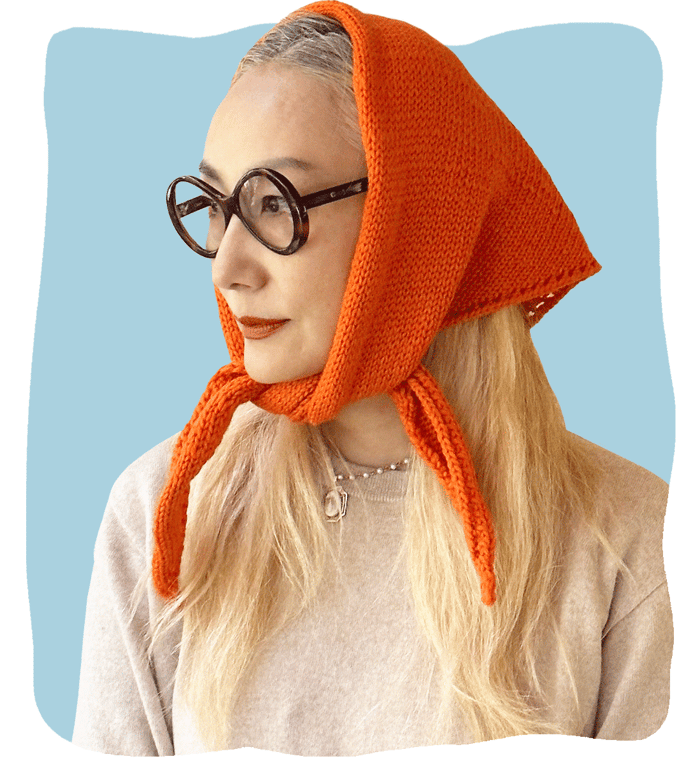
Europa Neckerchief in Dream
There’s no right answer — and that’s the point. The form supports a wide range of preferences and styles, which is part of why it continues to appeal to so many knitters.
Playing With Scale and Texture
One of the reasons we continue working with this construction is how dramatically it responds to small changes.
Yarn choice alone can transform the entire piece. A soft worsted-weight wool creates something light and versatile, while super chunky merino produces instant drama and warmth. Needle size, stitch definition, and finishing details all contribute to the final feel.
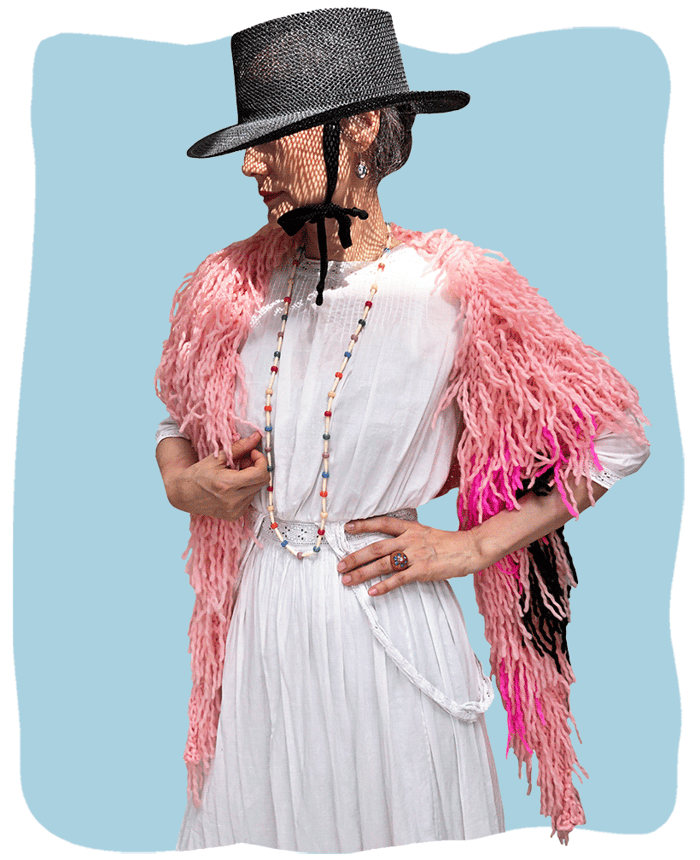
Drama Queen Shawl in Dream
Texture plays a role as well. Smooth surfaces feel modern and clean. Chunky stitches add weight and presence. Embellishment introduces personality without altering the underlying structure.
None of this requires advanced skills. It’s about intention rather than complexity — deciding where to focus attention and where to let simplicity do the work.
Why These Scarves Get Worn
Beyond the knitting itself, knitted triangle scarf succeeds because it’s genuinely easy to live with. A triangular scarf doesn’t dictate how it should be worn. It adapts to different bodies, outfits, and climates.
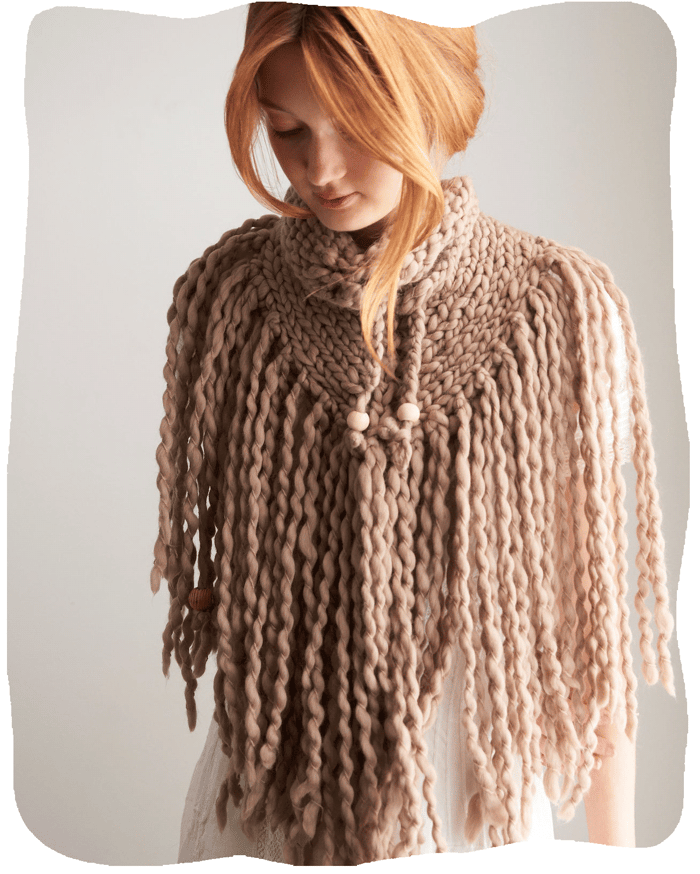
Little Triangle Fringe Bandana in Merino No. 5
One piece can look relaxed one day and sculptural the next, depending on how it’s styled. That versatility makes it a practical addition to a handmade wardrobe — not something that sits unused because it feels too precious or too specific.
When we design, wearability is always part of the conversation. If something doesn’t feel good on the body, it doesn’t matter how interesting it was to knit.
A Form Worth Revisiting
There’s a reason we keep coming back to knitted triangle scarves. It offers structure without rigidity, creativity without overwhelm, and freedom without chaos. It’s approachable but never dull.
For us, working with triangle scarves is less about novelty and more about exploration. Each version is an opportunity to see how a small change can shift the entire outcome.
Her Fringe Shawl in Merino No. 5
That’s why knitted triangle scarves continue to feel right to us — season after season. Not because they’re everywhere, but because they remain open to interpretation.
Start simple. Add a twist. Make something you’ll actually want to wear.
DIY Kit - Her Shawl - Merino No. 5

$130.00
Skill Level: Beginner — see level guide Some projects are impossible to ignore. Her Shawl is one of them. When a scarf isn’t enough and a blanket is too much—there’s Her Shawl. Plush, sculptural, and wonderfully warm, this oversized wrap… Read More
FAQs
What are triangle scarves?
Triangle scarves are scarves or shawls knitted in a triangular form rather than a rectangle. They’re typically worn draped over the shoulders, wrapped around the neck, or tied in different ways. Because of their shape, they tend to sit naturally on the body and are easy to style.
Are knitted triangle scarves good for beginners?
Yes — many knitted triangle scarves are ideal beginner projects. The construction is usually straightforward, with simple increases and repetitive stitches. This makes them a great way to practice basic skills while still ending up with a finished piece you’ll actually wear.
How long does it take to knit a triangle scarf?
That depends on the yarn weight and size. Smaller versions knit in worsted-weight yarn can be completed in a few relaxed evenings. Oversized styles made with super chunky yarn often knit up very quickly — sometimes in just a few hours — which makes them especially satisfying projects.
How much yarn do I need for a triangle scarf?
Yarn requirements vary based on scale and yarn weight. Many lightweight triangle scarves use as little as two balls of yarn. Larger, oversized shawls require more, especially when knit in chunky or super chunky yarn. Always check the specific pattern for guidance.
Can I customize a triangle scarf?
Absolutely. One of the strengths of this construction is how easy it is to customize. You can adjust size, change yarn, add fringe, incorporate embroidery, or stop knitting earlier or later depending on how you want it to fit and drape. Small changes can make a big difference.
What’s the difference between a triangle scarf and a triangle shawl?
The terms are often used interchangeably. Generally, smaller pieces worn around the neck are called scarves, while larger versions worn over the shoulders are referred to as shawls. Both usually share the same underlying triangular construction.
What yarn works best for triangle scarves?
Many yarn types work well. Worsted-weight yarns are versatile and approachable, while chunky and super chunky yarns create bold, cozy results. The best choice depends on whether you want something lightweight and layerable or oversized and statement-making.
Why are triangle scarves so versatile?
Because of their shape, triangle scarves can be worn in multiple ways without needing fasteners or complicated styling. They adapt easily to different outfits, body types, and climates, which is why they continue to be a popular and enduring knitwear form.